
Every year on 12th August, India celebrates National Librarians’ Day to commemorate Dr. S.R. Ranganathan. He is known as the father of library science in India. His research work laid the foundation for library’s functionalities towards organizing information and serving the communities towards the nation building.
Various activities are being conducted in the institutional libraries like seminar, workshop debate,quiz, essay writing etc.
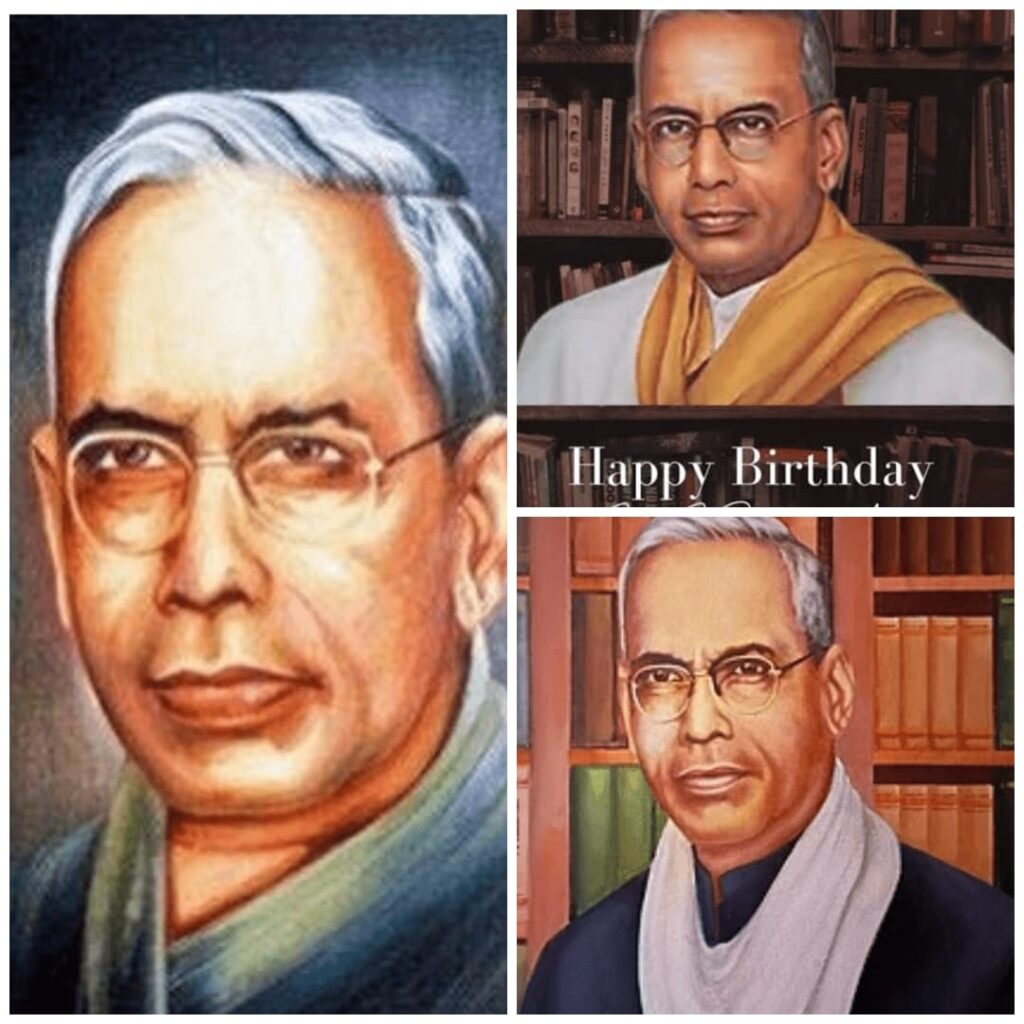
Basic information about Dr. S.R.Ranganathan
Full name – Shiyali Ramamrita Ranganathan
Born – 9 August 1892,
Place of birth – Shiyali (now Sirkazhi), Tamil Nadu, India
Date of death – On 27 September 1972, Bangalore, Karnataka, India
Profession – Mathematician, Librarian, Library Scientist, Educator
Famous- As Father of Library Science in India
Major Contribution- Developed the Five Laws of Library Science
Five Laws of Library Science
1. Books are for use
- Every reader his/her book
- Every book its reader
- Save the time of the reader
- The library is a growing organism
Other Contributions – Created the Colon Classification system for arranging books in libraries
Education- M.A. in Mathematics, University of Madras; Trained in Library Science in London
Awards- Padma Shri (1957)
Legacy – Inspired modern library systems in India; his birthday (12 August) is celebrated as National Librarian’s Day in India
Books authored –
1931 – Five Laws of Library Science His most famous work; foundation of library science principles
1933 – Colon Classification Introduced his innovative system for classifying books
1938 – Theory of Library Catalogue Guidelines for creating effective library catalogues
1944 – Prolegomena to Library Classification Detailed theory behind his classification methods
1945 – Classification and Communication Focused on how knowledge is organized and shared
1950- Library Administration Guide on managing libraries effectively
1951- Philosophy of Library Classification Philosophical basis for classification systems
1957- Documentation and Its Facets Covered different aspects of documentation and information
1963 – Library Book Selection Principles and policies for choosing books for libraries
1967- Prolegomena to Library Administration Expanded view on library management
1967- Reference Service Explained how to help readers find the right information