The Ministry of Education, Government of India, plans to launch the School Management Committee (SMC) Guidelines 2026 on May 6, 2026. This initiative aims to bridge the gap between schools and communities, ensuring that every child receives a high-quality and inclusive education.
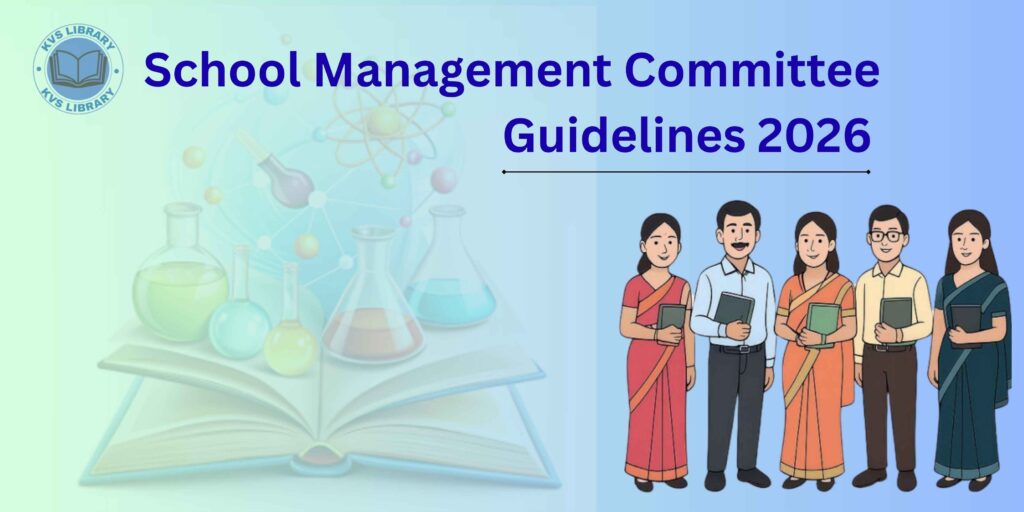
This SMC guidelines aligned with the National Education Policy (NEP) 2020, the shift focus from administrative checklists to foster a culture of “shared responsibility” among parents, teachers, and local stakeholders.
What are the New SMC Guidelines 2026?
The SMC Guidelines 2026 are a comprehensive framework designed to standardize the functioning of School Management Committees across India. While SMCs have been a part of the Right to Education (RTE) Act 2009, the 2026 update introduces more structure, digital monitoring, and increased community power.
Key Objectives of the 2026 Reform:
- Strengthening Local Governance: Empowering committees to make real-time decisions for school improvement.
- Transparency & Accountability: Implementing clearer tracking for school funds and resource utilization.
- Community-Led Monitoring: Encouraging regular social audits by parents and local members.
- Inclusive Learning Environments: Ensuring schools are equipped to support children from all backgrounds and abilities.
Under the new 2026 framework, the School Management Committee role becomes more executive. It is no longer just a consultative body but a vital partner in school success.
The Strategic Role of SMCs in School Development
Under the new 2026 framework, the School Management Committee role becomes more executive. It is no longer just a consultative body but a vital partner in school success.
| Feature | Role of SMC (Pre-2026) | Role of SMC (2026 Guidelines) |
| Decision Making | Mostly advisory | Participatory & shared authority |
| Fund Monitoring | Limited oversight | Structured tracking of school grants |
| NEP Alignment | General awareness | Deep integration with 5+3+3+4 goals |
| Parental Involvement | Occasional meetings | Active participation in School Development Plans |
Alignment with National Education Policy (NEP) 2020
The launch of these guidelines is closely aligned with the vision of the National Education Policy (NEP) 2020, which focuses on:
- Participatory education system
- Inclusive learning environment
- Community-driven school governance
NEP 2020 strongly promotes the idea that education is a shared responsibility, and the involvement of parents and communities can significantly improve learning outcomes.
Expected Impact on Indian Schools and Students
The rollout of the SMC Guidelines 2026 is expected to trigger a significant shift in how government and aided schools operate:
- Better Infrastructure: Quicker resolution of facility issues through local committee intervention.
- Reduced Dropout Rates: Enhanced parent-teacher coordination helps identify at-risk students early.
- Standardized Performance: A uniform roadmap helps schools in rural and urban areas maintain the same quality standards.
Shri Dharmendra Pradhan Launches the Guidelines of School Management Committee (SMC)
Here’s a shorter and easy-to-read version:
Key Points of SMC Guidelines 2026
- The launch marks an important step under NEP 2020, with guidelines available in 22 languages for easy access.
- The main aim is to strengthen the connection between schools and the community, making education a shared responsibility.
- All previous guidelines are now combined into one simple document, to be implemented from the 2026–27 session.
- SMCs have shown real impact—improving attendance, increasing admissions, supporting student health, and upgrading school facilities.
- A major change is that the SMC chairperson will be a parent, ensuring stronger community participation.
- The guidelines apply to all schools and cover all stages from pre-primary to Class 12.
- Focus areas now include child safety, mental health, and basic learning skills (FLN), along with infrastructure.
- Schools will prepare a 3-year vision plan for continuous development.
- Community involvement is encouraged through activities like “Tithi Bhojan” and tree plantation.
- Emphasis is also on inclusive education and the use of modern tools like AI and digital classrooms.
Frequently Asked Questions (FAQs)
1. When will the SMC Guidelines 2026 be launched?
The guidelines will be officially launched on May 6, 2026, by the Ministry of Education.
2. Are the 2026 SMC guidelines mandatory for all schools?
They are primarily designed for government and government-aided schools across India to ensure standardized governance.
3. How can parents join the School Management Committee?
Parents can participate through the mandatory 75% parent-representation quota in the committee, usually selected through local school meetings.
4. What is the full form of SMC?
Answer: School Management Committee.
5. What is the role of parents in SMC/VMC?
Answer: Parents help in decision-making, monitoring, and improving school functioning
Disclaimer:
This article provides an overview based on recent media reports and government announcements. Please refer to the official gazette notification from the Ministry of Education for legal and technical specifics. This article is designed for informational and educational purposes.
You may also read:
KVS Learners’ Achievement Test (LAT) 2026-27 for Classes 3, 6 & 9: Official Date, Exam Pattern, Syllabus & Guidelines
School Management Committee (SMC )Guidelines 2026: Ministry of Education to Launch New School Governance Norms on May 6, 2026
The Ministry of Education, Government of India, plans to launch the School Management Committee (SMC)…

Buddha Purnima:A Simple Guide to Life and Teachings of Buddha
Ambedkar Jayanti 2026: Date, History, Significance, Holiday, Quotes & Celebration Guide

KVS Split Up Syllabus 2026-27 (Class-wise & Subject-wise)
The KVS Split Up Syllabus 2026-27 has been released by Kendriya Vidyalaya Sangathan (KVS), New…